
A research partnership between Grimaldi Development (G Dev) and KTH Royal Institute of Technology has achieved a significant milestone in the field of climate technology. Since its inception in 2021, the collaborative carbon capture project has bridged the gap between academia and industry, transforming cutting-edge research into real-world applications.
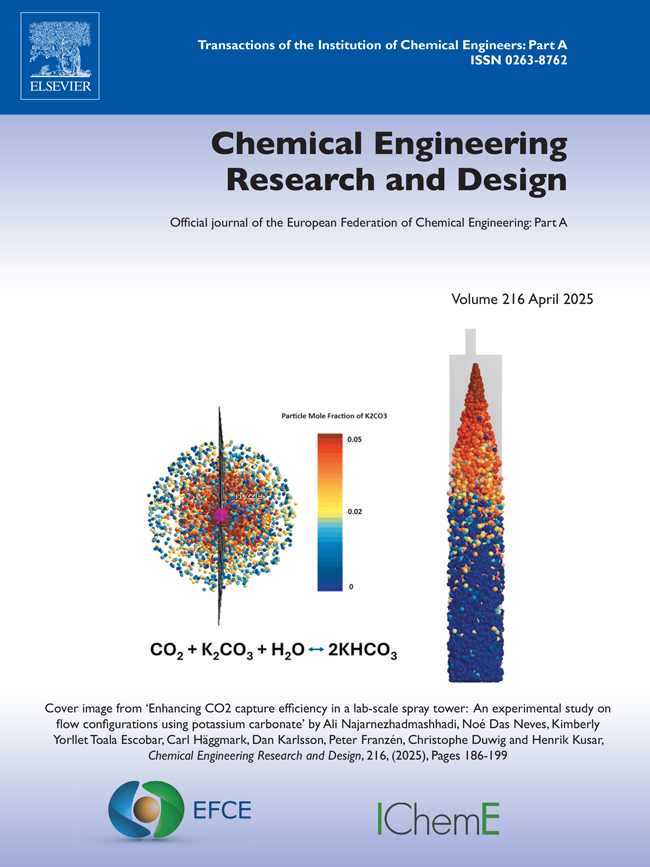
Among the contributors to this progress is Dr. Ali Najarnezhadmashhadi, a researcher at KTH, whose work on spray absorber towers has gained global attention. Not only was his article in Chemical Engineering Research and Design selected as the front cover feature for Volume 216 (April 2025), but he has also been nominated for the prestigious Best Researcher Award under the Global Particle Physics Excellence Awards.
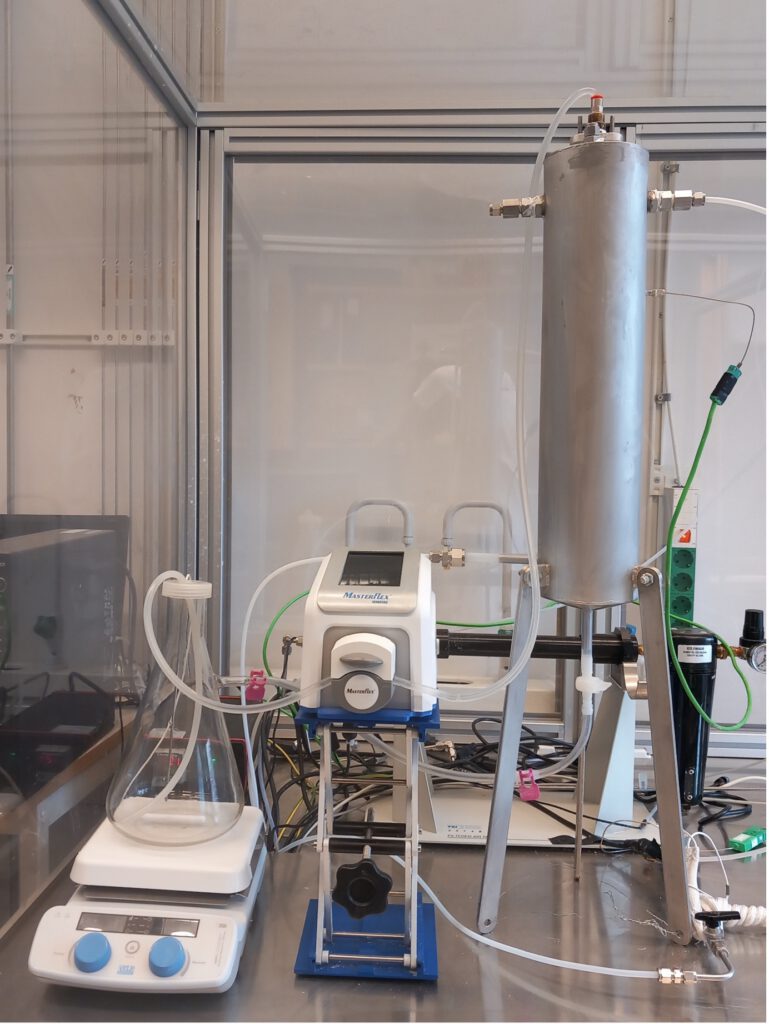
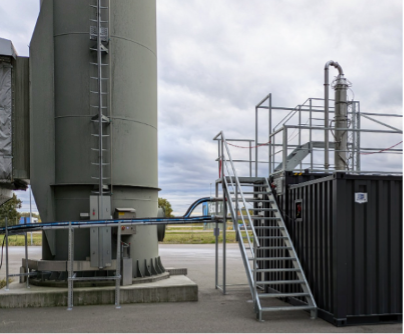
This innovative carbon capture system began in the lab, where KTH researchers—including Professors Lars Pettersson (now retired), Christophe Duwig, and Henrik Kusar, along with Dr. Najarnezhadmashhadi—designed a series of experimental spray towers. Starting with a 30 cm lab-scale unit, the system was gradually scaled up to 50 cm. In the next phase, the collaboration between KTH and the G Dev team led to the development of a 2-meter pilot version at G Dev’s industrial lab. Building on the insights gained from these prototypes, the teams jointly constructed the final 4-meter mobile spray tower, which is now connected to the KV62 facility at Tekniska verken in Linköping—bringing research into full-scale, real-world application.
What sets this project apart is its commitment to education and knowledge sharing. Over six Master’s theses and multiple internships, both national and international, have been integrated into the project, offering students hands-on experience in applying theoretical concepts to industrial challenges. From chemical analysis to process design, students have gained insights into CO₂ absorption dynamics, multiphase flow behavior, and sustainability-focused innovation.
“This project exemplifies how academic research can evolve into practical, scalable technology that benefits both the environment and industry,” says Dr. Ali Najarnezhadmashhadi. “Our collaboration with GDev is built on shared ambition—turning ideas into impactful solutions.”
With strong backing from the Swedish Energy Agency and a dynamic partnership model, the KTH-GDev collaboration continues to push the boundaries of sustainable engineering.
This achievement not only highlights the success of academic-industry cooperation but also underscores the role of innovative engineering in tackling climate change—one spray tower at a time.